
The best Linux distro for developers is Ubuntu LTS for compatibility, Fedora Workstation for up-to-date tooling, and Debian for stability. The right choice depends on your stack, your hardware and how much you want to tinker. Here’s how the top options compare, so you can pick one and start coding.
Quick picks
| If you want… | Choose |
|---|---|
| The safest default, best docs and vendor support | Ubuntu LTS |
| Fresh toolchains and a polished GNOME desktop | Fedora Workstation |
| Rock-solid stability for servers and long projects | Debian Stable |
| Tiling window management and good NVIDIA support out of the box | Pop!_OS |
| Full control and the newest packages | Arch Linux / EndeavourOS |
| A reproducible, containerized workflow | Fedora Atomic / Bluefin |
| Rolling updates with strong tooling | openSUSE Tumbleweed |
The Best Linux Distro for Developers
1. Ubuntu LTS: best overall
Ubuntu LTS is the default target for most tutorials, CI images, cloud VMs and vendor docs. If something is documented for Linux, it’s documented for Ubuntu first. Long-term support releases get five years of security updates, so you won’t be forced to upgrade mid-project.
Best for: web and backend development, cloud and DevOps, beginners.
Watch out for: Snap-packaged apps can be slower to start, and some packages lag behind upstream.
2. Fedora Workstation: best for up-to-date tools
Fedora ships recent compilers, kernels and language runtimes while staying stable enough for daily work. It’s also the upstream for Red Hat Enterprise Linux, so skills carry over to enterprise environments. SELinux is on by default, which is good practice for security-conscious developers.
Best for: systems programming, containers, anyone targeting RHEL-family servers.
Watch out for: a release roughly every six months means regular upgrades.
3. Debian Stable: best for stability
Debian prioritizes reliability over novelty. It’s an excellent base if you build long-lived services or want a machine that never surprises you. Newer language versions usually come from version managers (like asdf, mise or rustup) rather than the system package manager.
Best for: server-like workstations, embedded and infrastructure work.
Watch out for: packages are older by design.
4. Pop!_OS: best out-of-the-box for NVIDIA and tiling
Pop!_OS from System76 (a US-based Linux hardware maker) includes proprietary NVIDIA drivers in its dedicated image and built-in tiling window management, which is handy when you juggle an editor, terminal and browser.
Best for: ML and CUDA work, multi-window workflows.
Watch out for: a smaller community than Ubuntu or Fedora.
5. Arch Linux or EndeavourOS: best for control
Arch gives you the newest packages and the AUR, a huge community repository. EndeavourOS adds a friendly installer on top. You’ll learn Linux deeply, but you’re also responsible for maintenance.
Best for: experienced users who like to configure their own environment.
Watch out for: rolling updates occasionally need manual attention.
6. Fedora Atomic / Bluefin: best for immutable workflows
Immutable distros keep the base system read-only and run your development tools in containers (Distrobox, Toolbx, Dev Containers). Updates are atomic and easy to roll back. If you already live in containers, this model is a natural fit. See our guide to immutable Linux distros.
Best for: container-first developers, people who hate breaking their system.
Watch out for: installing system-level software works differently.
7. openSUSE Tumbleweed: best rolling release with a safety net
Tumbleweed gives you current software with automated testing (openQA) and Btrfs snapshots through Snapper, so a bad update is easy to undo.
Best for: developers who want rolling updates without Arch-level maintenance.
How to choose
- Beginner or want maximum compatibility? Ubuntu LTS.
- Want modern tools and a clean desktop? Fedora Workstation.
- Use NVIDIA GPUs for ML? Pop!_OS or Ubuntu.
- Container-first workflow? Fedora Atomic / Bluefin.
- Want to learn Linux deeply? Arch or EndeavourOS.
Also check hardware support. Laptops from System76, Framework and Lenovo ThinkPad (many models are certified for Ubuntu and Fedora) tend to work best.
Set up your dev environment in 15 minutes
Ubuntu / Debian:
bash
sudo apt update && sudo apt install -y build-essential git curlFedora:
bash
sudo dnf groupinstall -y "Development Tools" && sudo dnf install -y git curlThen add:
- A version manager for your language (
mise,asdf,nvm,pyenv,rustup). - Docker or Podman for containers.
- Your editor, such as VS Code on Ubuntu.
Planning a fresh install? Our guide to installing Linux on a laptop covers dual-boot and live USB testing.
FAQ – Best Linux Distro for Developers
What is the best Linux distro for programming?
Ubuntu LTS is the safest all-round choice. Fedora Workstation is the best pick if you want newer tooling.
Which Linux distro is best for web development?
Ubuntu LTS or Fedora. Both have excellent Node.js, Python, PHP and Docker support, and most tutorials assume Ubuntu.
Is Arch Linux good for developers?
Yes, if you enjoy configuring your system. It has the newest packages, but it needs more maintenance.
Do I need a powerful laptop to run Linux for development?
No. Most distros run well on 8 GB of RAM. For containers or VMs, 16 GB is more comfortable.
Can I use Linux for Windows or .NET development?
Yes. .NET runs natively on Linux, and VS Code works well. For Windows-only tools, use a VM or dual boot.
Last updated: October 2026 – Best Linux Distro for Developers

Best Linux Distro for Developers in 2026: 7 Top Picks by Use Case
The best Linux distro for developers is Ubuntu LTS for compatibility, Fedora Workstation for up-to-d…

Immutable Linux Distros Explained: The Image-Based OS Revolution in 2026
Immutable Linux distros have moved from a niche experiment to a mainstream desktop option in 2026. F…

GhostLock: A 15-Year Linux Kernel Bug Has a 5-Second Public Root Exploit
A Linux kernel vulnerability that has been hiding in plain sight since 2011 was publicly disclosed o…

How to Install Linux on a Laptop: A Step-by-Step Guide – 2026
Switching to Linux can breathe new life into an aging laptop, boost your privacy, and hand you full …
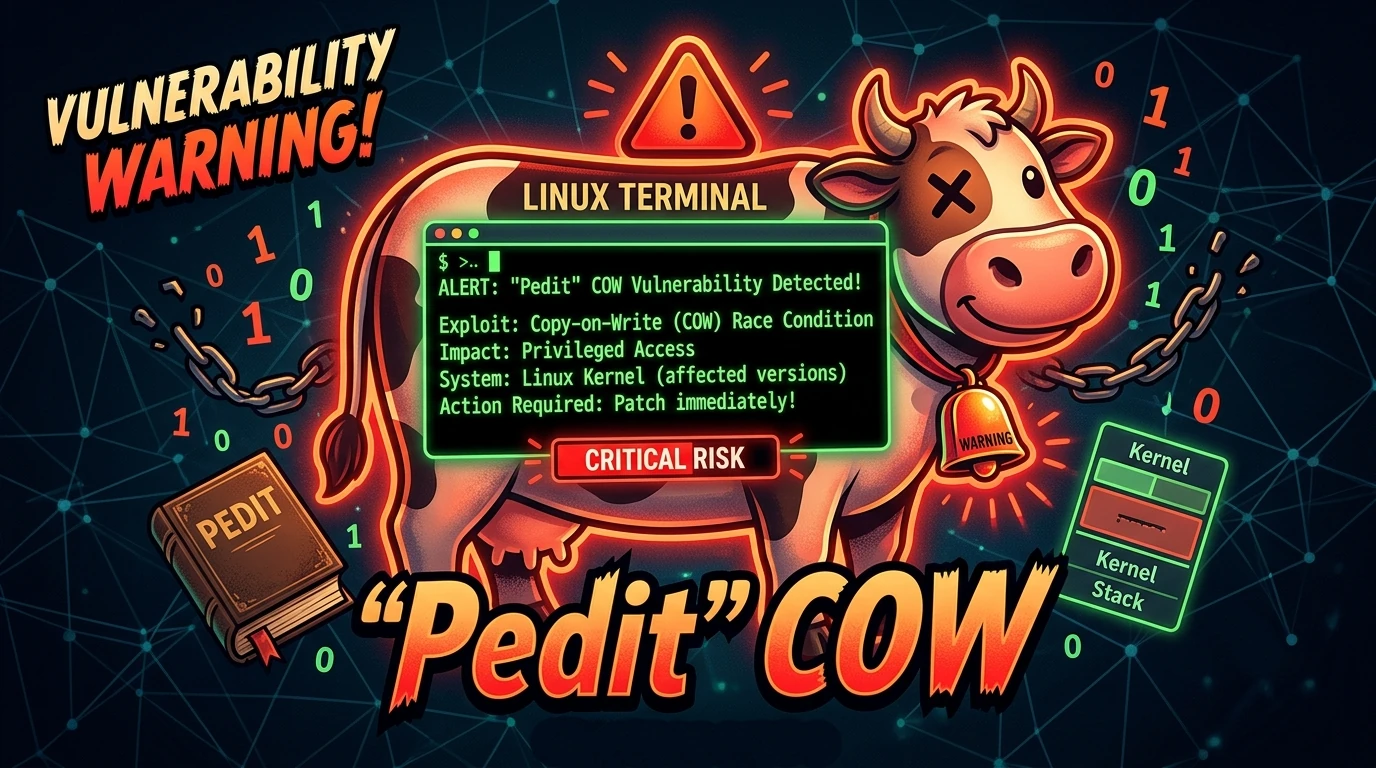
Pedit COW Explained: The Linux Kernel Flaw Letting Local Users Become Root
A new Linux kernel vulnerability nicknamed “pedit COW” has become one of the biggest sec…
The AUR Malware Attack Exposed a Fact Most Arch Users Don’t Know
Here is something most Arch Linux users have never thought carefully about: the Arch User Repository…

The Rise of AI-Enhanced Operating Systems: Linux and Beyond
- by Steven Kontra
- January 11, 2025
In recent years, artificial intelligence (AI) has seamlessly woven itself into the fabric of technology, transforming the way we interact with devices and systems. Operating systems (OS) are no exception to this evolution. While there are no operating systems entirely developed by AI yet, several Linux distributions and other OSs are incorporating AI features to… Read More »The Rise of AI-Enhanced Operating Systems: Linux and Beyond

LibreOffice 7.6.2 and 7.5.7 Updates Released to Tackle Critical WebP Vulnerability
- by Steven Kontra
- September 29, 2023
The Document Foundation has rolled out two security updates for its widely-used LibreOffice open-source office suite—versions 7.6.2 and 7.5.7. The primary focus of these updates is to address a recently identified vulnerability in the WebP codec. These releases, which arrived earlier than initially planned, feature a fix for CVE 2023-4863. This vulnerability was a heap… Read More »