
Skip to content

Steven Kontra

Local AI on Linux running on a desktop PC with 16GB RAM

Run AI Locally on Linux: What Can a 16GB PC Actually Handle?

Running local AI on Linux is more accessible than you might expect. You do not necessarily need a new workstation, an expensive graphics card, or another monthly subscription to get started. A Linux computer with 16GB of RAM can run smaller language models for tasks such as rewriting text, explaining code, brainstorming ideas, and summarizing… Read More »Run AI Locally on Linux: What Can a 16GB PC Actually Handle?

Linux Mint 27 "Adrien"

Linux Mint 27 “Adrien”: Release Date, New Features and Upgrade Guide

Linux Mint 27 “Adrien” arrives Christmas 2026 on Ubuntu 26.04 LTS. See what’s new, why point releases are ending, and whether you should upgrade from Mint 22.3. Short answer: Linux Mint 27 “Adrien” is planned for Christmas 2026. It’s built on Ubuntu 26.04 LTS and will come in Cinnamon, Xfce and MATE editions. Mint is… Read More »Linux Mint 27 “Adrien”: Release Date, New Features and Upgrade Guide

Fortnite on Linux

Fortnite on Linux: Release Date, Requirements and Which Distros Will Work

Short answer: Epic Games confirmed on October 14, 2026 that Fortnite is coming to Linux, but there’s no release date yet. It will launch through the new Epic Games Launcher (Linux preview), and it will need a Linux setup with Secure Boot, TPM 2.0 and a signed kernel. The Steam Deck is not supported at… Read More »Fortnite on Linux: Release Date, Requirements and Which Distros Will Work

Best Linux Distro for Developers

Best Linux Distro for Developers in 2026: 7 Top Picks by Use Case

The best Linux distro for developers is Ubuntu LTS for compatibility, Fedora Workstation for up-to-date tooling, and Debian for stability. The right choice depends on your stack, your hardware and how much you want to tinker. Here’s how the top options compare, so you can pick one and start coding. Quick picks If you want…… Read More »Best Linux Distro for Developers in 2026: 7 Top Picks by Use Case

Immutable Operating Systems

Immutable Linux Distros Explained: The Image-Based OS Revolution in 2026

Immutable Linux distros have moved from a niche experiment to a mainstream desktop option in 2026. Fedora, openSUSE, Debian-based Vanilla OS, and the Universal Blue project now all ship image-based editions as first-class releases, not side projects. Traditional Linux distros are prone to breaking after a bad update, a stray package conflict, or years of… Read More »Immutable Linux Distros Explained: The Image-Based OS Revolution in 2026

GhostLock Linux vulnerability

GhostLock: A 15-Year Linux Kernel Bug Has a 5-Second Public Root Exploit

A Linux kernel vulnerability that has been hiding in plain sight since 2011 was publicly disclosed on July 7, 2026, along with a fully working exploit that turns any unprivileged local user into root in about five seconds, at 97% reliability. Researchers at Nebula Security named it GhostLock, tracked as CVE-2026-43499, and Google awarded them… Read More »GhostLock: A 15-Year Linux Kernel Bug Has a 5-Second Public Root Exploit

How to Install Linux on a Laptop: A Step-by-Step Guide - 2026

How to Install Linux on a Laptop: A Step-by-Step Guide – 2026

Switching to Linux can breathe new life into an aging laptop, boost your privacy, and hand you full control over your operating system — but if you’ve never done it before, the process can feel intimidating. This guide walks you through how to install Linux on a laptop, from choosing the right distribution to fixing… Read More »How to Install Linux on a Laptop: A Step-by-Step Guide – 2026

pedit cow linux

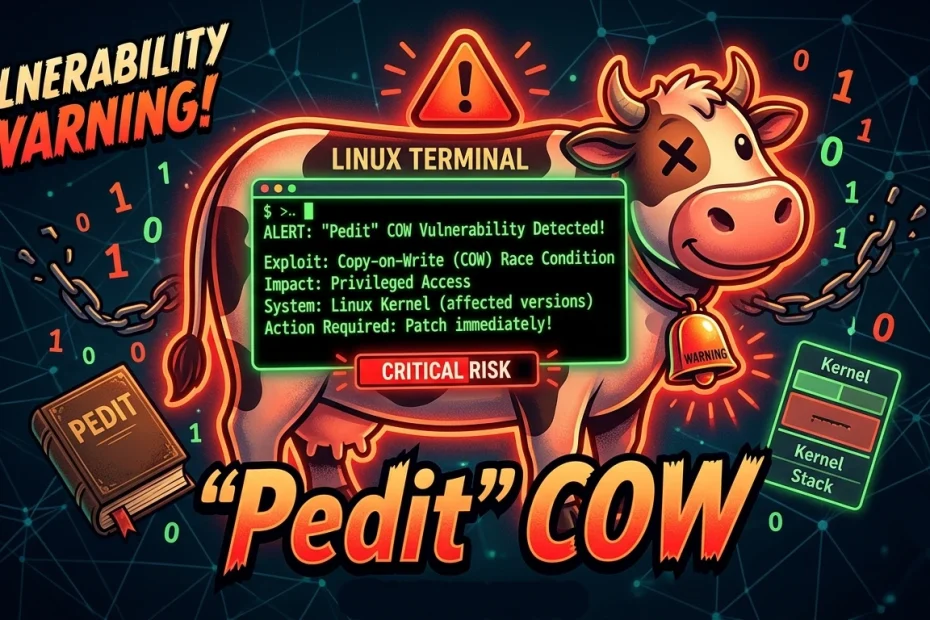
Pedit COW Explained: The Linux Kernel Flaw Letting Local Users Become Root

A new Linux kernel vulnerability nicknamed “pedit COW” has become one of the biggest security stories of June 2026. Tracked as CVE-2026-46331, the bug lets an ordinary, unprivileged user on a Linux machine climb all the way to root — without ever touching a file on disk. A working exploit went public within a day… Read More »Pedit COW Explained: The Linux Kernel Flaw Letting Local Users Become Root

AUR malware attack

The AUR Malware Attack Exposed a Fact Most Arch Users Don’t Know

Here is something most Arch Linux users have never thought carefully about: the Arch User Repository — the AUR, the place millions of Arch users go to install software that isn’t in the official repos — has no code review process at all. Anyone can upload a package. Anyone can take over a package whose… Read More »The AUR Malware Attack Exposed a Fact Most Arch Users Don’t Know