Here’s how AlmaLinux 10 stacks up against Ubuntu 24.04 LTS for VPS hosting—focusing on stability and security:
Stability & Support Lifespan
- AlmaLinux 10
- Based on RHEL 10; designed for enterprise use with long-term, predictable support. Each version gets up to 10 years of security updates, matching RHEL’s lifecycle
- Built for “install once, maintain forever”—minimal changes over time make it ideal for mission-critical systems
- Ubuntu 24.04 LTS (“Noble Numbat”)
- Released in April 2024, with 5 years of standard security support until April 2029, plus up to 10 years with Ubuntu Pro, and even 12 years with the Legacy add-on.
- Considered stable now—it’s at least on its second point release (24.04.2) and is regarded as solid for production use.
Comparison: AlmaLinux offers a longer support window by default, whereas Ubuntu gives shorter free support but allows extension via paid/pro subscriptions.
Security Posture & Hardening
- AlmaLinux 10
- Leverages RHEL’s security model, including SELinux, robust digital signing, and enterprise-grade patching
- Seen as highly stable and, by extension, more secure for long-lived deployments.
- Ubuntu 24.04 LTS
- Introduced many modern security improvements: enforcing strong APT repo signing, disabling legacy TLS, and improved AppArmor hardening.
- AppArmor (default in Ubuntu) is easier to configure than SELinux but still provides strong confinement.
- Extended security features available through Ubuntu Pro, including kernel live patching, CIS compliance, and enhanced CVE coverage.
Summary: Both are secure out of the box. AlmaLinux emphasizes SELinux-based, enterprise-grade security with a longer support window, whereas Ubuntu offers modern defaults and optional enhanced protections via subscription.
Community & Ecosystem
- AlmaLinux
- Strong alignment with RHEL’s ecosystem—helpful if you’re migrating from CentOS or building enterprise-grade infrastructure.
- Documentation is more centralized (similar to Red Hat), but Ubuntu has wider community resources.
- Ubuntu
- Massive community, excellent documentation, and widespread industry support—particularly for cloud-native, DevOps, and containerized environments.
TL;DR: Which Should You Choose?
| Your Priority | Recommended OS | Why |
|---|---|---|
| Longest possible support with enterprise-grade stability | AlmaLinux 10 | 10-year lifecycle + SELinux + RHEL-compatible ecosystem |
| Strong defaults + vibrant ecosystem + cloud/DevOps tools | Ubuntu 24.04 LTS | Modern security defaults, huge community, extendable via Ubuntu Pro |
| Flexible, familiar cloud-hosting + container tooling | Ubuntu 24.04 LTS | First-class support on AWS, GCP, Azure, and more frontend tools |
| RHEL legacy, minimal upgrades, mission-critical use | AlmaLinux 10 | Minimal churn, upstream compatibility, trusted enterprise workflow |
Final Thoughts
- AlmaLinux 10 wins on long-term stability and default enterprise security, making it excellent for long-running servers, legacy systems, or environments where uptime and consistency are paramount.
- Ubuntu 24.04 LTS shines for those wanting modern toolchains, community backing, widespread cloud compatibility, and optional extended protections through Ubuntu Pro.
Your choice hinges on whether you prioritize long-term, low-change deployments (AlmaLinux) or a modern, community-driven ecosystem with flexible support (Ubuntu).
Linux in IoT – Why Linux Is at the Heart of IoT
When diving into the world of the Internet of Things (IoT), you’ll quickly notice a recurring theme: Linux in IoT is everywhere. From smart thermostats and wearable devices to industrial…

How to Add Swap Virtual Memory in Linux for Better Performance (Without Losing Data)
Running out of memory on a Linux system can slow everything down—or even crash your applications. If…

How to Fix Common Linux Performance Issues + Top Tools to Speed Up Your System
Why Is Your Linux System Running Slow? Linux is known for its speed and efficiency—but even the most…
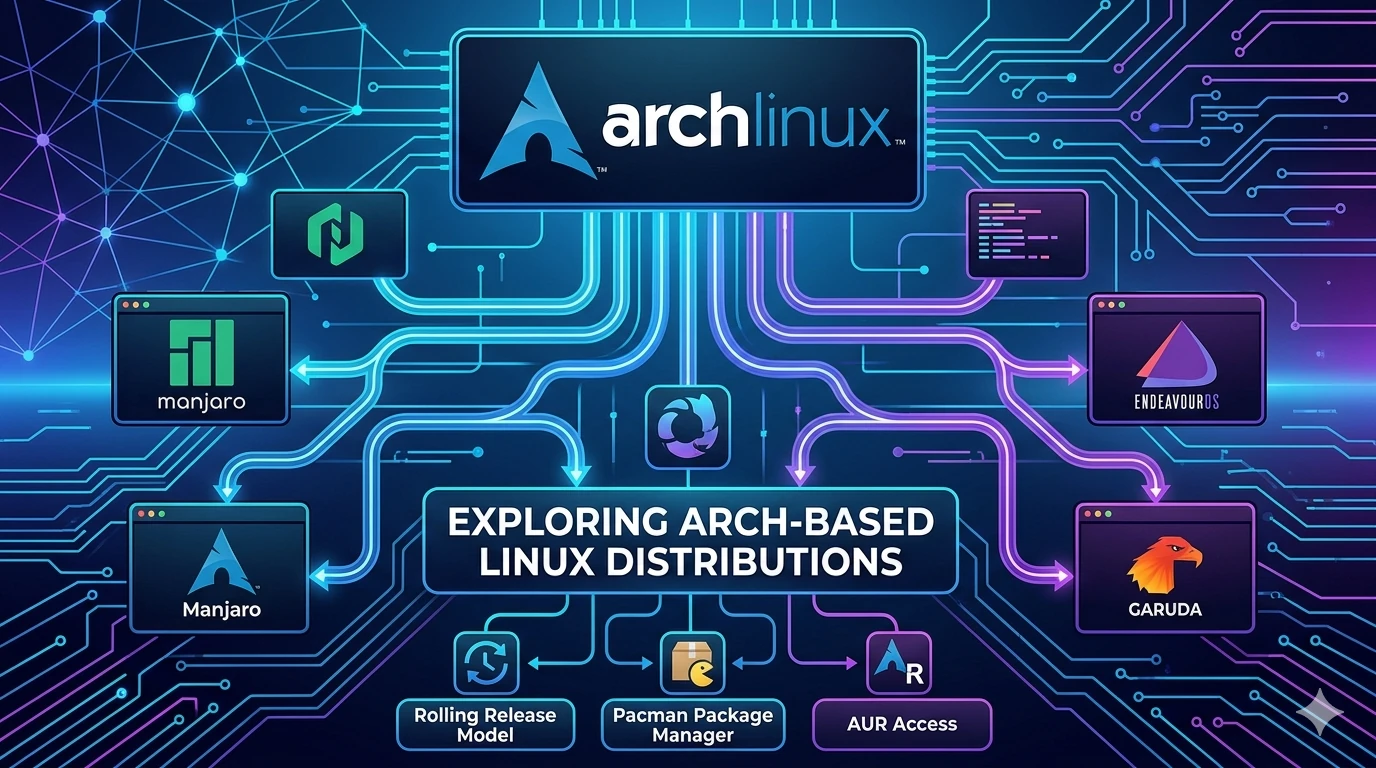
Top 15 Arch Based Linux Distributions in 2026
Why Choose an Arch Based Linux Distribution? Arch Linux has long been known for its rolling release …
Linux Kernel 7.0: The Next Major Chapter in Linux Development
The Linux ecosystem is preparing for an important milestone: Linux Kernel 7.0. While Linux kernel ve…

Top Irish Linux Distros in 2026
When people say “Irish Linux distros”, they usually mean systems that are developed or headquartered…

Key Trends Shaping the Linux in 2026
As we navigate the midpoint of the 2020s, the Linux ecosystem, long the bedrock of enterprise comput…